How to Lift Without Hurting Your Back
Most back strain doesn't happen at the gym. It happens in the driveway, hauling in grocery bags, or in the living room, scooping up a toddler who refuses to walk another step. These everyday moments feel too routine to think about, which is exactly why they catch people off guard.
The good news is that safe lifting isn't complicated. It comes down to a few mechanical habits that protect your spine, no matter what you're picking up. Once these habits become automatic, they work whether you're loading a car trunk or carrying a laundry basket up the stairs.
Why Ordinary Lifting Sneaks Up On You
When you know you're about to lift something heavy, like a couch or a bag of soil, your body tends to prepare. You brace, you plan your grip, you think about your footing. The problem is the load you don't expect to be a problem: a case of water, a sleeping child, a box that looked lighter than it turned out to be.
These unplanned lifts often happen with poor posture already in place. Maybe you're twisted to reach something on a shelf, or bending forward with straight knees to grab a bag off the floor. Add a little extra weight, a fast movement, or an awkward angle, and the muscles and joints in your lower back can end up carrying more strain than they're built to handle in that position.
The fix isn't avoiding lifting things. It's building a default posture that stays safer even when you're not thinking about it.
The Core Mechanics of a Safer Lift
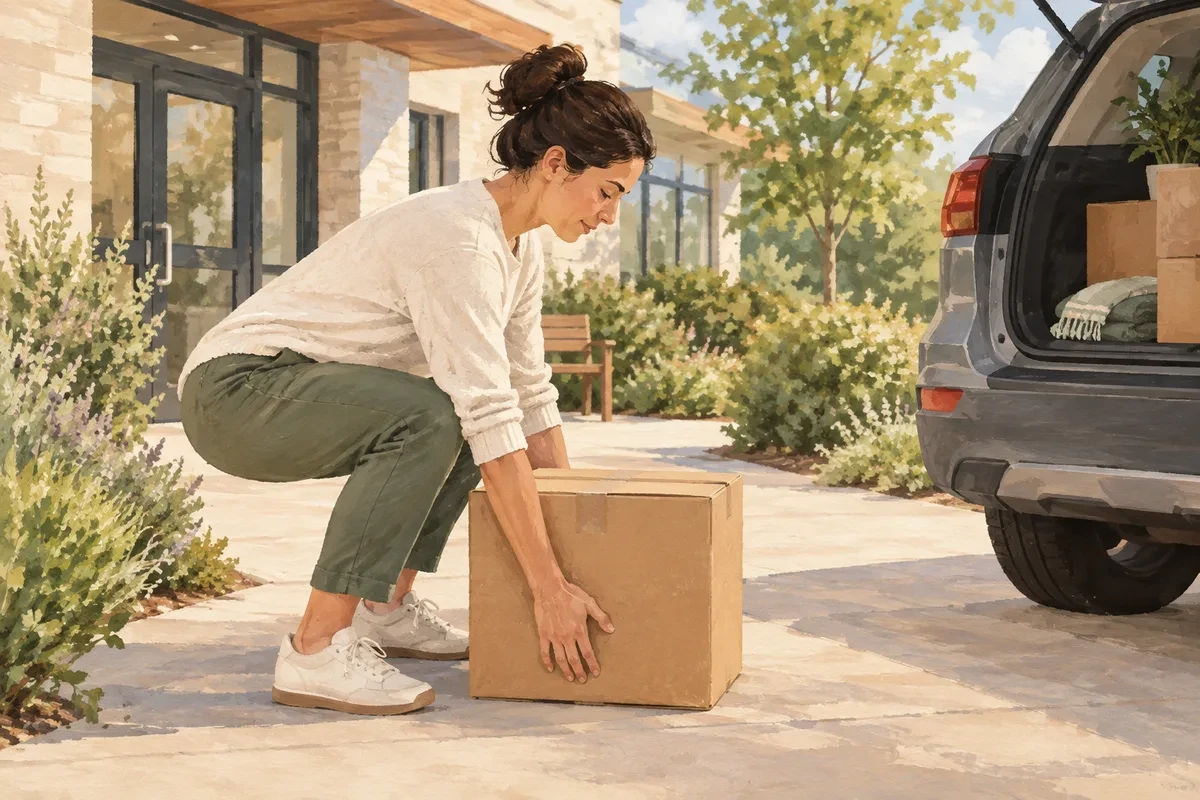
Start with your feet. A stable base, shoulder width apart with one foot slightly ahead of the other, gives you better balance than standing with your feet together. From there, bend at your hips and knees rather than rounding through your lower back. Think of it as sitting into a squat, not folding forward at the waist.
Keep the object close to your body throughout the lift. The farther a load sits from your torso, the more leverage it has against your spine, even if the item itself isn't heavy. Hug a grocery bag or a box against your chest rather than reaching out to grab it and pulling it toward you.
As you stand, let your legs do the work. Push through your heels and straighten your knees and hips together, keeping your back in a neutral, naturally curved position rather than arching or rounding. Avoid twisting while you lift. If you need to turn, move your feet to change direction instead of rotating through your spine.
None of this requires special equipment or extra time. It's really just a sequence: solid footing, bent knees, load held close, and a controlled stand. Once it becomes a habit, it applies almost everywhere.
Awkward Loads: Kids, Bags, and Everything In Between
Children rarely wait for good form. If you're lifting a child, try to get close to them first, bend your knees, and scoop them in against your body before standing, rather than leaning over a crib rail or car seat and pulling them toward you from a distance.
Grocery bags and boxes create a different challenge because the weight is often uneven or the item is bulky. When possible, split a heavy load into two smaller bags rather than one that strains your grip and pulls you off balance. If something is too wide to hold close, consider sliding it onto a cart, a dolly, or asking someone to help carry one end.
Getting items in and out of a car trunk deserves its own attention, since the awkward height and reach tend to encourage rounded shoulders and a bent back. Slide the item toward you first, keep it close to your body, and step back before lifting rather than reaching deep into the trunk and hoisting from a stretched position.
Listening to Your Body Over Time
Occasional soreness after a busy moving day or a weekend of yard work is common and usually settles down with rest. What's worth paying closer attention to is discomfort that lingers, spreads, or shows up repeatedly with ordinary tasks like lifting a laundry basket or bending to tie your shoes.
Everyone's history with their back, hips, and shoulders is different, so it's not something we can speak to in general terms alone. If lifting has become something you dread or work around, it's worth having a conversation with a provider who can look at your specific movement patterns and history.
At Summit Physical Therapy in Austin, our team works with patients recovering from injuries and surgeries, as well as people dealing with ongoing strain from daily movement patterns. Depending on what's going on, care might involve sports rehab, post-surgical rehab, dry needling, or vestibular therapy, chosen based on what actually fits your situation.
Small Habits, Fewer Setbacks
Safe lifting mechanics aren't about being cautious to the point of avoiding normal life. They're about giving your back the support it needs so you can keep doing the things you actually want to do, from carrying kids to hauling in the week's groceries without a second thought.
If you've noticed recurring strain, stiffness, or pain connected to lifting, don't wait for it to resolve on its own. Reach out to our Austin office and we can talk through what you're experiencing and figure out the right next step together.
Questions about your own care? The team at Summit Physical Therapy is happy to help — call us at (512) 555-0188 or request an appointment.
This content is for general information only and isn't medical advice. Check with your provider or doctor before you start a new exercise or treatment. If you have a medical emergency, call 911.